The Path to Purpose - Finding Your "Why"

Bethany Graver • February 27, 2024

Discovering Your Why: Unveiling Your Purpose
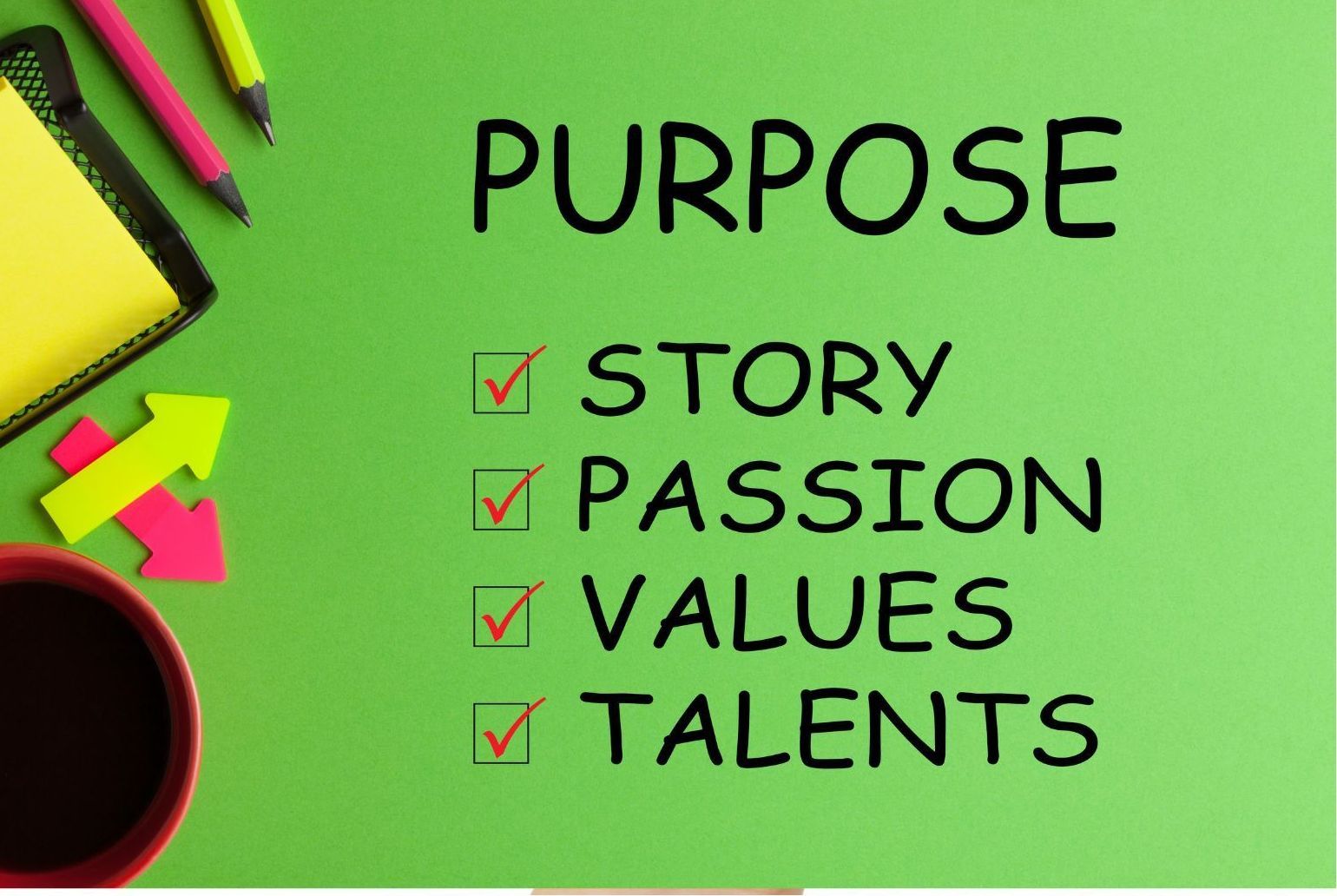
Have you ever found yourself questioning the purpose of your existence? Do you wonder why you do the things you do and what drives you? The search for our “why” is a fundamental aspect of our personal growth and fulfillment, and one that many people struggle to define for themselves. When we uncover our true purpose, life becomes more meaningful, and we gain a sense of direction that guides our choices and actions. 


In this blog post, we will dive  into the journey of finding your why and explore some practical tips to help you along the way. 


Reflect on Your Passions:

A great first step to begin uncovering your why is by reflecting on your passions. Take a moment to think about the activities or causes that ignite a fire within you. What topics or activities do you find yourself naturally drawn to? What brings you joy and a deep sense of fulfillment? Identifying your passions can lead you to align your purpose with them, allowing you to feel more fulfilled in the pursuit of your ambitions.


Examine Your Values:

Our values play a significant role in defining who we are and what we stand for. Ask yourself what principles you want to embody and promote in your personal and professional life. Identifying your core values will help you align your actions and decisions with your purpose, resulting in a greater sense of fulfillment and authenticity. 


Understand Your Strengths:

Often, our purpose aligns with our strengths to make a positive impact on others or the world around us. Recognizing and cultivating these strengths can guide you towards fulfilling your true purpose. What are you naturally good at? What are your unique talents or abilities? 

If you have a hard time answering these questions, consider asking someone close to you for feedback on what they think you do well. Sometimes, our inner critic can cloud our objectivity and self-assessment. It’s good to get insights from our family, friends and colleagues to gain insights into how we influence and impact those around us. 


Reflect on Your Impact:

Now that you’ve considered your passions, values and strengths, consider the kind of impact you want to have on the world. Do you aspire to bring positive change, inspire others, promote sustainability, or foster compassion? Or maybe you look at chaotic situations and have a strong desire to create order and organization. Understanding the intersection between your talents, passions and the impact you wish to make provides clarity and helps you connect with your why on a deeper level.


Embrace the Self-Discovery Process!

Finding your why is a process of self-discovery that requires self-reflection and patience. Allow yourself permission to explore different paths, experiment with new experiences, and be open to unexpected opportunities. Embracing self-discovery enables personal growth, and the more you learn about yourself, the closer you come to uncovering your true purpose.

Keeping a journal is an excellent way to work through the process of self-discovery, and track the progression of your thoughts and insights that come along the way. 


Unearthing your why is an ongoing journey, and it is never too late to begin. By reflecting on your passions, understanding your values, recognizing your strengths, and considering the impact you wish to have, you can gradually find clarity and purpose in your life, even and especially as the circumstances and events of your life change and evolve. 


So, begin your journey today, and take the first step toward feeling more fulfilled and connected to your purpose. You owe it to yourself to live a life that is aligned with your true why.


And if you want even more support in discovering your purpose, we’re hosting an in-person workshop on March 7th to help guide your process, provide additional resources, tools, and connect you with a community of purpose-driven people who are working to develop the best versions of themselves.



By Aamira Dixon June 17, 2026
The Quiet Ways Teenagers Experience Exclusion, Judgment, and Emotional Harm
By Aamira Dixon June 15, 2026
Understanding Identity, Belonging, and the Pressure to Be Like Everyone Else
By Aamira Dixon June 12, 2026
Why So Many Parents Feel Like They're Falling Behind
By Aamira Dixon June 10, 2026
Understanding Emotional Safety, Connection, and Why Some Children Shut Down Around Certain Adults
By Linda Chase June 9, 2026
How Parents Can Spark Curiosity to Raise Motivated, Engaged Learners Parents of school-age children often notice a shift: the endless “why” questions start to fade, and school becomes something to finish rather than explore. The challenge isn’t a lack of ability, it’s that schedules, pressure to perform, and fear of mistakes can quietly crowd out children’s natural curiosity. When curiosity shrinks, self-motivated learning becomes harder, and even capable kids can disengage. Nurturing curiosity now supports engaged learners and lays a steady foundation for nurturing child development. Why Curiosity Fuels Learning Momentum Curiosity is the brain’s way of saying, “This matters, pay attention.” When kids get to wonder, test ideas, and notice patterns, they build stronger thinking skills through repeated practice. That sense of pull matters because intrinsic motivation helps learning feel chosen, not assigned. It matters because curiosity makes effort easier to sustain. A child who feels safe to ask and experiment is more likely to persist through confusion and bounce back from mistakes. Over time, that steady engagement supports deeper understanding and more flexible problem-solving. Think of curiosity like a mental spark that lights the next step. A child who asks how a bike gear works may read, tinker, and try again after a failed attempt. The learning sticks because the question belonged to them. When curiosity has room to show up, modeling it at home starts to feel natural and doable. Make Learning Visible: A Parent Model Kids Can Copy When kids see curiosity in action, they learn that questions and effort are what keep learning moving. Let your learning be something they can actually notice: ask questions out loud, show genuine excitement when you discover an answer, and be willing to try a new skill even when you’re rusty. That might look like watching you puzzle through a problem, saying, “I’m not sure yet,” and staying engaged anyway, so exploration feels normal, not performative. Earning an online degree can reinforce that message by building your knowledge and confidence while fitting around real family schedules. For relevant context , an online accounting degree could deepen your business acumen and teach you how to read financial statements, understand auditing, and work with generally accepted accounting principles. Build a Home That Invites Discovery: 7 Simple Setups A curiosity-friendly home doesn’t need to look like a classroom. A few intentional “yes spaces” and routines make it normal for kids to explore, especially when they see you learning out loud, too. Create a visible “grab-and-go” book nook: Put 15–25 books where kids already linger (couch, kitchen table, bedside), not tucked on a high shelf. Rotate a few each week, mix comics, how-to books, and picture-heavy nonfiction so every reading mood has an option. Keep a small basket for “I want to ask about this” bookmarks so questions turn into conversations. Make the library a predictable family ritual: Pick one day every 1–2 weeks and keep it short, 30 minutes is enough to browse, check out, and reset interest. Give each child a simple mission such as “one fun book, one new-topic book, and one audio book,” and let them lead. Tie it to your modeling from earlier: check out a book for yourself too and share one surprising thing you learned at dinner. Set up an “open-ended builders bin” for daily tinkering: Choose educational toys and resources that can be used a hundred ways, blocks, connectors, gears, magnetic tiles, marble-run pieces, then store them in one clear bin kids can access without help. A gentle prompt like “Can you build something that stands up to a shake test?” invites problem-solving without turning it into a lesson. Many families like building sets because building toys can help students understand concepts about architecture, structural stability, measurements, design, and more . Keep a low-mess art and making station always ready: Stock a small caddy with paper, pencils, markers, tape, glue stick, scissors, and a recycled-materials box (cardboard, bottle caps, scrap fabric). The key is “open, not perfect”: a washable tablecloth and a simple cleanup routine (“make, photo, reset”) protects your sanity. Use it to support hobbies, comic drawing, model-making, fashion sketches, whatever your child keeps returning to. Designate a “kitchen science” shelf for hands-on learning: Pick 5–8 safe items for experiments, measuring cups, food coloring, vinegar, baking soda, magnets, a small scale, and store them together. Add a notebook labeled “What we noticed” so kids can draw results or write one sentence. When you’re learning visibly, narrate your own wondering: “I’m not sure why it foams, what should we try next?” Use learning apps as tools, not babysitters: Choose one or two apps that match a current interest (space, coding puzzles, language, music) and set a simple boundary such as 15–20 minutes, then “show me one thing.” Ask for a tiny teach-back, one new word, one strategy, one level they found tricky, so the screen time turns into shared learning. Carve out a hobby-friendly space with “permission to pause”: Give each child a small spot, desk corner, shelf, or rolling cart, where ongoing projects can stay out for a few days. Add a “parking lot” sticky note so they can stop mid-project without losing momentum: “Next time I will…”. This reduces quitting because taking breaks feels like part of the process, not a failure. Curiosity and Motivation Questions Parents Ask Q: How do I motivate my child without turning everything into a reward? A: Focus praise on effort and strategy, not outcomes: “You tried two ways,” or “You kept going when it was tricky.” Offer privileges that fit the activity, like extra time to continue a project, instead of prizes for performance. Ask what they want to get better at, then support the first small step. Q: What should I do when my child says learning is “boring” or “too hard”? A: Treat it as information, not defiance. Encourage open communication questions like “Which part is the worst?” and “What would make it 10 percent easier?” Then adjust one variable: shorter time, clearer directions, or a choice of topics. Q: How much help is too much when they get stuck? A: Aim for a hint, not a takeover. Try “What have you already tried?” then offer two options and let them pick. If frustration rises, take a reset break and return with a smaller, winnable piece. Q: When should I step in if they quit quickly? A: Step in when quitting is about overwhelm, not preference. Use a calm “pause plan” like “Stop, write the next move, and we’ll try for five minutes later.” Consistency matters more than intensity. Q: How can I celebrate small wins without bribing or pressuring? A: Celebrate the process with specific feedback and a shared moment: a photo, a high-five, or showing someone what they made. Help them set a tiny target since SMART goals keep progress concrete without adding pressure.  Keep Curiosity Alive With Small Shifts and Steady Support It’s easy to want kids to stay motivated while also worrying about pushing too hard or stepping back too far. The path forward is a curiosity-first mindset: use parental support techniques that protect questions, invite reflection, and make learning feel safe to explore. Over time, sustaining curiosity builds long-term engagement and keeps motivation rooted in meaning, not pressure. Curiosity grows when kids feel safe to wonder and capable of figuring things out. Choose one small change this week, like pausing to ask one better question and then listening, that keeps momentum toward motivating self-directed learning and encouraging continuous exploration. That steady approach strengthens resilience, confidence, and connection as learning becomes a lifelong habit.
By Aamira Dixon June 8, 2026
When Parenting Starts Feeling More Defeating Than Rewarding
By Aamira Dixon June 5, 2026
Emotional Withdrawal Is Often Deeper Than “Bad Attitudes”
By Aamira Dixon June 3, 2026
Living With the Fear of “What If Something Happens?”
By Aamira Dixon June 1, 2026
Understanding the Difference Between Character and Decision Making
More Posts